

Spring has well and truly arrived! A time for us all to enjoy longer daylight hours, lots of bird song, and more sunshine. For us at Mersey Gateway Environmental Trust, the change in season brings a big change in the work we conduct. Over winter we have been busy with habitat enhancement work on the saltmarshes at Astmoor and Widnes Warth; planting plug plants, removing reeds, and installing brushwood and coir rolls in creeks. However, as soon as April arrives all work on the saltmarsh is paused until later in the year to give space to some special visitors, breeding birds.
The only human activity we hope to find on these saltmarshes from April to August is that of ecologists Jeff and Laura, who conduct breeding bird surveys for Mersey Gateway Environmental Trust. The surveys assess populations of birds in the area and how many territories are being used for breeding. Surveyors look for signs of breeding such as nest building activity, birds carrying food, and males singing. The areas included in these surveys are shown in the map below.

Jeff and Laura have now started the 2026 breeding bird surveys, so give them a wave from a distance if you see them on the saltmarshes! In the meantime, we are now able to share the results from the 2025 breeding bird surveys. Across all 3 survey sites, there was an increase in the number of breeding bird territories from 2024 to 2025, by nearly 10%. This sounds like excellent news! And it is, but when we look in more detail at what is happening in each survey area, we see a slightly different story (see survey areas in the above map).
In the Wigg Island Local Nature Reserve (LNR) area, we saw a big increase in the number of breeding territories. It is always great to see an increase in breeding territories, however, the species increasing in the area are common birds such as magpies, blackbirds, and blackcaps.
On the saltmarshes, we have seen a decline in the number of breeding territories from 2024 to 2025. The declines aren’t huge, and they may well increase again in 2026. The long-term trends are what is important, rather than comparing just 2 years. However, it could be perceived as concerning that fewer key species such as meadow pipit and pochard were observed in 2025 compared to 2024, and it is something to keep an eye on.

To understand why such different species are found in the Wigg Island LNR compared to Astmoor Saltmarsh and Widnes Warth Saltmarsh, we must consider their habitat types. Wigg Island LNR has a parkland and shrubbery landscape, which is ideal habitat for the common bird species mentioned above. The saltmarshes at Widnes Warth and Astmoor are completely different landscapes and therefore support largely different species.

Wigg Island LNR: shrub habitat

Astmoor: saltmarsh habitat

Widnes Warth: saltmarsh habitat
The most common species found at Wigg Island LNR in 2025 were robins, wrens, and woodpigeons, very different to the most common species found on the saltmarshes. Astmoor saltmarsh was found to be full of skylarks, meadow pipits, reed buntings, sedge warblers, and reed warblers. Good numbers of meadow pipits were also found on Widnes Warth saltmarsh. The saltmarshes generally support more key species, compared to the more common species found at Wigg Island LNR.

How do we decide which species are ‘key’?
The Birds of Conservation Concern give the status of all regularly occurring birds in the UK. A red rating means threatened, amber means at risk, and green means currently stable. 44 species were recorded as having a breeding territory in 2025; 6 of these were red-listed species, 15 were amber-listed, and 23 were green-listed.
The table below shows that of the commonly found species in the survey areas, more red and amber listed species were found on the saltmarshes.


In previous years, we would find roughly the same number of red-listed species on the saltmarshes at Astmoor and Widnes Warth. However, in 2025, significantly higher numbers of red-listed species were found on Astmoor compared to Widnes Warth. The main reason for this difference is that Skylark heavily favoured breeding on Astmoor saltmarsh in 2025. There are a few reasons why this could be; first, that the saltmarsh on Astmoor is growing and providing more suitable habitat for nesting, second, is that there has been an increase in dog walking activity on Widnes Warth.
Ground nesting birds on the saltmarshes, including key species such as skylark, lapwing, and pochard, need space and quiet for successful breeding. Although the saltmarshes may look like a perfect location for dogs to run free, their presence scares birds away from their nests, often causing them to be abandoned. It is very important to stay off the saltmarshes during bird breeding season (March – September), to give these birds the space they need.
The droughts of 2025 made breeding for ground nesting birds much more difficult. Not only did the drier saltmarshes make the area more accessible for dog walkers, the dry, hard ground also had far fewer insects than usual for the birds to eat. It is positive to see that similar numbers of birds were found on the saltmarshes despite these challenges.
The changing climate is also causing changes in when birds arrive, with some species arriving weeks before they would be expected. It may be that we also need to start the breeding bird surveys earlier in the year to accommodate this change. We are also working on ways to re-wet the saltmarshes, which will be especially important should we continue to experience these droughts.
Some of the species found on the saltmarshes:
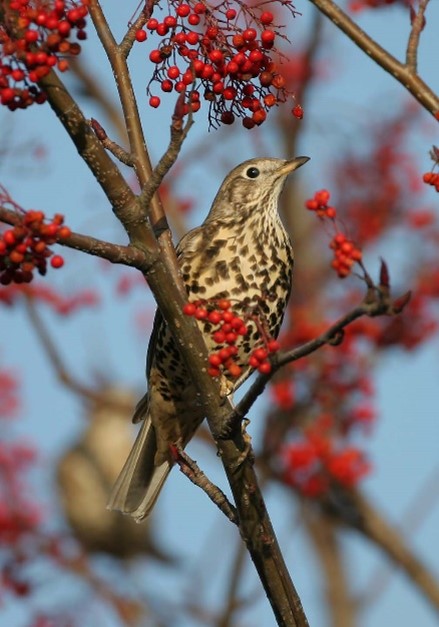
Mistle thrush: red-listed

Redshank: amber-listed
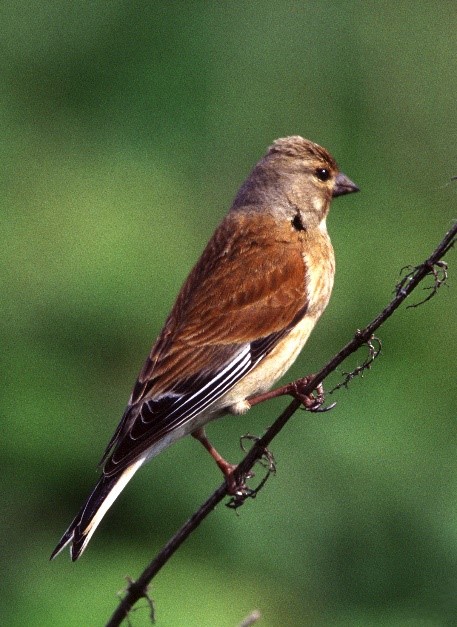
Linnet: red-listed

Lapwing: red-listed

Greenfinch: red-listed

Grasshopper warbler: red-listed

Gadwall: amber-listed

Common shelduck: amber-listed
It should be noted that these breeding bird surveys cover just a small area of the Mersey estuary. From Oglet shore and Hale coastline, all the way up to Moore nature reserve, there are thousands more birds to be found breeding along the Mersey estuary. It just goes to show how important this area is for these incredible species. For the Mersey estuary to continue being a haven for these birds, the main thing we can do is give them their space and enjoy them from a distance.